Knowledge Hub

Packaging Insights & Resources

Industry guides, material trends, and innovations in custom flexible packaging.

0%

In 2026, global bakery buyers are looking beyond attractive graphics and low unit prices. Flexible bakery packaging must protect products during filling, transport, storage, and retail display. A soft bread bag, a resealable cookie pouch, and a grease-resistant pastry wrap serve different purposes. Each format requires careful material and seal selection.

This guide examines the leading flexible bakery packaging types for international purchasing teams. It considers stand-up pouches, flat bags, flow-wrap films, paper-based laminates, zipper pouches, and high-barrier structures. Product freshness remains central. Oxygen, moisture, aroma, light, and mechanical stress can quickly affect bread, biscuits, cakes, and frozen pastries. Clear specifications help buyers compare suppliers more accurately. They also reduce costly packaging changes after production begins.

Small details matter.

Practical sourcing experience shows that packaging performance depends on the complete system, not one material alone. Film thickness, seal strength, filling speed, printing quality, and storage conditions all influence results. Regional recycling facilities should also be considered before selecting complex multilayer structures. A package may look sustainable but perform poorly in real distribution. That point deserves honest review. No single format suits every bakery, market, or climate. This article therefore balances product protection, shelf presentation, production efficiency, food-contact expectations, and end-of-life considerations. It also highlights questions buyers should ask about testing, traceability, supplier consistency, and documented compliance. Reliable decisions come from verified samples and realistic trials, not attractive brochures alone. Still, even well-planned trials cannot predict every retail condition. Continuous evaluation remains necessary as materials, equipment, and buyer expectations change.
2026 Top Flexible Bakery Packaging Types for Global Buyers

What Flexible Bakery Packaging Means and Why It Matters in 2026

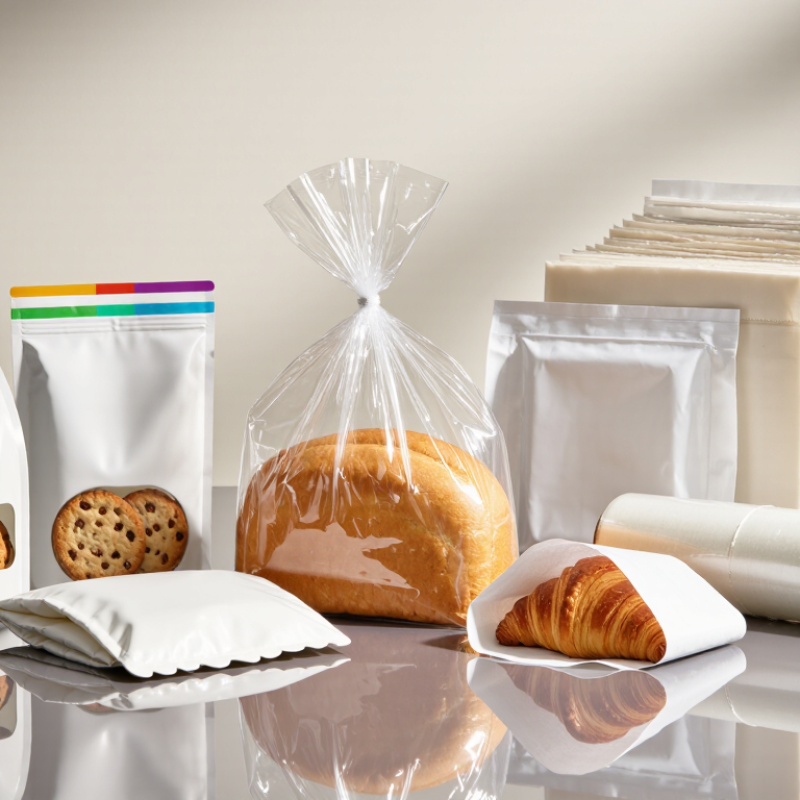
Flexible bakery packaging means thin, adaptable material formed into bags, pouches, films, or rollstock. Common structures include plastic laminates, coated paper, and recyclable mono-material films. They protect bread, pastries, and cakes from moisture, oxygen, grease, light, and handling damage.

The need is measurable. The FAO reported that 13.2% of food was lost globally before retail in 2021. Better packaging cannot solve every waste problem, but it can slow staling and reduce crushing during transport. Smithers estimated the global flexible packaging market at approximately US$260 billion in 2023, showing its importance across food supply chains. For 2026 buyers, packaging selection should consider seal strength, puncture resistance, printing quality, and filling-line speed.

A pillow bag suits sliced bread and buns because it uses material efficiently. Stand-up pouches fit cookies, snacks, and smaller bakery portions. High-barrier rollstock supports longer shelf life for filled products. Paper-based structures can improve shelf appeal, yet grease resistance and reliable sealing remain difficult. A paper look is not the same as easy recycling. That distinction matters.

In practical trials, operators should test packs after vibration, stacking, temperature changes, and repeated opening. A package that performs well on a clean factory line may fail when crumbs enter the seal area. Recyclability claims also need local collection evidence, not attractive wording alone. The honest question is simple: does the pack protect the bakery product with the least responsible material use?

How to Classify Flexible Packaging by Material and Structure

Flexible bakery packaging is best classified in two layers: material and structure. Material describes the film itself. Common options include polyethylene (PE) for sealability and moisture protection, polypropylene (PP) for stiffness and heat resistance, and polyester (PET) for strength and print stability. Polyamide adds toughness, while paper and aluminum foil improve appearance or barrier performance. Smithers reported that the global flexible packaging market reached about US$201.7 billion in 2023 and may approach US$249.7 billion by 2028. Bakery demand is one practical driver.

Structure describes how these materials are arranged and converted. A mono-PE pouch uses one main polymer family and may simplify recycling systems where suitable infrastructure exists. Laminated PET/PE or PET/foil/PE structures provide stronger oxygen, aroma, light, and grease barriers.

Flow wrap suits sliced bread and snack cakes. Stand-up pouches suit cookies and baking ingredients. Flat sachets fit small portions. The right structure depends on shelf life, filling speed, seal temperature, and product fragility.

Material names alone can mislead.

During buyer trials, check the seal area after compression, not only the printed film. A crisp biscuit may require oxygen protection, while soft bread usually needs moisture control and controlled gas exchange. The Flexible Packaging Association has highlighted flexible packaging’s significant role in modern food distribution, but recyclability claims still depend on local collection and sorting. A paper-looking pack can hide a plastic barrier. Classification is useful, yet it is never the whole purchasing decision.

Which Packaging Types Suit Different Bakery Products

2026 Top Flexible Bakery Packaging Types for Global Buyers

Which Packaging Types Suit Different Bakery Products

Packaging choice should follow the product’s moisture, fat, and oxygen sensitivity. Fresh bread usually needs breathable polyethylene film or perforated flow wrap. These formats help control condensation while keeping loaves soft. For sliced bread, higher-barrier multilayer film can slow mould growth and preserve aroma. Packaging tests matter more than appearance.

Cookies and crackers need strong moisture protection. Metallized film pouches or high-barrier laminated bags help maintain a crisp bite. Resealable stand-up pouches suit premium cookies and repeated consumption. Smithers’ global flexible packaging research reports that food remains a major end-use sector, driven by shelf-life protection and lightweight formats. Yet, a shiny pouch is not automatically the best pouch.

Croissants, filled pastries, and cakes need different protection. Grease-resistant paper-based laminates can suit dry pastries, while trays with lidding film protect delicate icing and decoration. For cream-filled products, oxygen and temperature control become critical. The Flexible Packaging Association reported approximately US$40 billion in United States flexible packaging sales in 2023, showing the format’s commercial scale. However, recycling claims can become unclear when films combine several materials. Buyers should request barrier data, seal-strength results, migration documentation, and local recycling guidance before approval. Small bakeries may prefer simple mono-material pouches. Larger exporters may still need multilayer structures for long shipping routes. Neither option wins every market test.

2026 Top Flexible Bakery Packaging Types for Global Buyers

Which packaging types suit different bakery products?

The suitability score ranges from 1 to 5 and reflects practical fit based on product protection, sealability, flexibility, visibility, and handling requirements. Flow wrap is highly suitable for sliced bread and individual pastries, while stand-up pouches and high-barrier flat pouches are better suited to cookies and dry bakery snacks. Tray lidding films are more suitable for cakes and delicate products that need structural support.

How to Compare Barrier, Sealability, and Shelf-Life Performance

2026 Top Flexible Bakery Packaging Types for Global Buyers

How to Compare Barrier, Sealability, and Shelf-Life Performance

Choosing bakery packaging starts with the product, not the film name. Bread needs moisture control, while cookies often need oxygen and grease resistance. Measure water vapor transmission rate, oxygen transmission rate, seal strength, and puncture resistance. A strong barrier can still fail if seals wrinkle around crumbs. That small detail matters during filling.

The FAO’s 2024 State of Food and Agriculture reports that 13.2% of food is lost before retail globally. Packaging cannot solve every loss, but better shelf-life control can reduce avoidable waste. UNEP’s Food Waste Index Report 2024 estimates 1.05 billion tonnes of food were wasted in 2022. These figures support a practical approach: test packaging against real storage humidity, transport vibration, and opening habits. Laboratory results alone may look too perfect.

Tips: Request WVTR and OTR data at stated temperatures and humidity. Compare seal strength after filling, not only before filling. Check whether the package opens cleanly without tearing the product. For soft bread, prioritize moisture balance and compression resistance. For crisp biscuits, test oxygen, moisture, and seal integrity together. Use standards such as ASTM F88 and ASTM F1927 where suitable. No structure wins every test. A lower-cost laminate may perform well, but only after validation across seasons.

What Global Buyers Should Check Before Choosing a Packaging Type

Flexible bakery packaging must match the product, not only the marketing plan. Soft bread needs moisture control, while crisp biscuits need strong barriers against humidity. Cakes may require grease resistance and stable support during transport. Fit matters.

Global buyers should inspect pouch films, paper bags, flow-wrap films, and flexible laminated structures against real bakery conditions. Ask for food-contact declarations, migration test results, seal-strength data, and material specifications. Do not guess. A package may pass a laboratory test yet fail after twelve hours in a warm delivery truck.

Check whether the structure runs smoothly on existing filling equipment. Observe wrinkled seals, trapped crumbs, weak corners, and inconsistent cutting during a production trial. These small defects can create waste and customer complaints. Also review recycling guidance, local labeling rules, import requirements, and minimum order quantities in each target market. A thinner film may reduce material use, but it can tear during pallet handling. A paper-based option may look responsible, yet its moisture barrier may be insufficient for fresh bread. Samples should face heat, pressure, stacking, and storage tests before approval. We once treated appearance as proof of quality; that was a poor assumption. Suppliers should provide batch records and corrective-action procedures, not just attractive samples.

Reliability is shown when specifications remain consistent across repeated deliveries.

FAQS

What packaging suits fresh bread?

Breathable film or perforated flow wrap helps control condensation. It keeps loaves soft without trapping excessive moisture. Test compression resistance during transport. Small differences matter.

What packaging works for sliced bread?

Higher-barrier multilayer film can slow mould growth and preserve aroma. Check moisture protection and seal quality together. A strong film still fails when crumbs wrinkle the seal.

How should cookies and crackers be packaged?

Use metallized film pouches or high-barrier laminated bags. They protect crisp texture from moisture. Resealable pouches suit repeated opening. Shiny packaging alone proves nothing.

What packaging protects croissants and dry pastries?

Grease-resistant paper-based laminates may suit dry pastries. They help resist oily marks and surface damage. The final choice depends on filling, transport, and storage humidity.

How should cakes and decorated pastries be packaged?

Trays with lidding film can protect icing and delicate decoration. Leave enough internal space to prevent contact damage. A beautiful package is useless if the topping sticks.

What extra protection do cream-filled products need?

Cream-filled products require careful oxygen and temperature control. Test packaging under realistic storage conditions. Cold-chain problems cannot be fixed by film alone.

Which packaging tests should buyers request?

Request water vapor transmission, oxygen transmission, seal strength, and puncture data. Test seals after filling, not only before filling. Include crumbs, grease, vibration, and humidity.

Can laboratory results predict real shelf life?

Not completely. Laboratory results may look too perfect. Test packages during humid storage, transport vibration, and repeated opening. Seasonal validation is wise, though sometimes overlooked.

Are mono-material pouches always better than multilayer structures?

No. Simple mono-material pouches may suit small bakeries and shorter routes. Multilayer structures can offer stronger protection for long-distance exports. Neither option wins every market test.

Conclusion

Flexible bakery packaging is a lightweight, adaptable solution designed to protect bread, pastries, cakes, biscuits, and other baked goods during storage, transport, and sale. In 2026, its importance lies in balancing product freshness, visual appeal, convenience, and material efficiency. Packaging can be classified by material and structure, including single-layer films, laminated films, pouches, bags, wraps, and resealable formats. Each option offers different levels of flexibility, strength, transparency, and protection.

The best choice depends on the bakery product’s moisture, fat, oxygen, light, and handling requirements. Buyers should compare barrier performance, heat-sealing reliability, puncture resistance, opening convenience, and expected shelf life before making a decision. They should also check packaging dimensions, printing quality, filling-line compatibility, minimum order quantities, storage conditions, recycling considerations, and compliance with the destination market’s food-contact requirements. A well-selected Flexible bakery packaging type can help reduce product waste, preserve texture and flavor, and improve efficiency across international supply chains.

Liam

Liam

Liam is a dedicated marketing professional with extensive expertise in the industry, specializing in elevating the company's products to new heights. With a keen understanding of market trends and consumer behavior, he crafts compelling narratives that resonate with our target audience. Liam takes......