1. Executive Sourcing Guide: Navigating Modern Custom Printed Flexible Packaging
In today's fast-moving global supply chain, custom printed flexible packaging has evolved far beyond a passive vessel for brand artwork. For multinational snack brand managers, commercial bakery purchasing directors, and pet food manufacturers, flexible packaging represents a complex intersection of polymer material science, high-speed automated machine compatibility, barrier preservation, and stringent food safety compliance.
As global procurement teams shift their search parameters toward AI-driven intent modeling and semantic search evaluation, standard surface-level sales collateral no longer cuts it. Procurement executives demand empirical data: exact Oxygen Transmission Rates (OTR), Water Vapor Transmission Rates (WVTR), coefficient of friction (COF) for Form-Fill-Seal (FFS) lines, and validated dual-sourcing strategies that prevent stockout risk.
Choosing the wrong flexible film laminate can compromise product shelf life by up to 60%, cause seal degradation on high-speed packaging lines, or violate upcoming FDA and EU circular economy mandates. This guide synthesizes over two decades of manufacturing and import expertise from American Packaging Solutions (APS) to streamline your sourcing decisions.
Whether your enterprise requires high-barrier laminated rollstock for automated vertical FFS machines or high-impact custom stand-up pouches with recloseable tactile closures, achieving optimal shelf performance requires aligning print execution with polymer chemistry.
2. Comprehensive Product Recommendations & Material Matrices
To assist packaging engineers and buyers in matching specific consumer goods applications with the correct conversion formats, APS manufactures and imports five core flexible packaging product classes:

Stand-Up Pouches (SUP)
Features bottom gussets (Doypack, K-Seal, or Plow-Bottom) delivering superior shelf stability and brand visibility. Options include press-to-close zippers, tear notches, and clear windows.
Best For: Snack Foods, Nuts, Confectionery, Dried Fruit
Automated Rollstock Film
Precision-engineered continuous roll film designed for high-speed Horizontal (HFFS) and Vertical (VFFS) equipment. Formulated with controlled COF for slip performance.
Best For: High-Volume Bakery, Pasta, Cheese, Mass Retail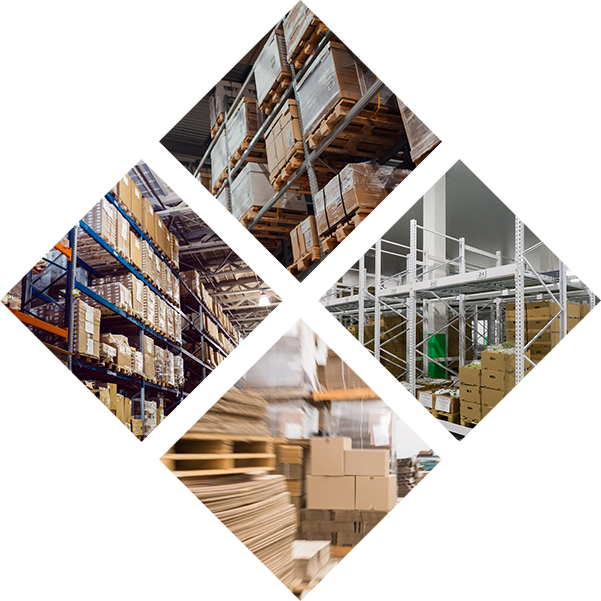
High-Barrier Foil & EVOH Laminates
Multi-layer structures incorporating Aluminum Foil, EVOH, or Metallized PET to eliminate light, moisture, and oxygen transfer completely.
Best For: Coffee, Processed Meats, Spices, Sensitive Powders
Quad-Seal & Flat Bottom Bags
Box-shaped format providing 5 printable display panels for maximum graphic impact. Offers high volumetric capacity and structural integrity for heavier loads.
Best For: Premium Pet Food, Bulk Grains, Specialty RetailTechnical Specification Matrix: Laminate Structure vs. Barrier Efficacy
When specifying flexible materials, engineering teams must weigh barrier metrics against cost efficiency. Below is a comparative baseline for standard enterprise packaging structures:
| Laminate Structure | Substrate Composition | OTR (cc/m²/24hr) | WVTR (g/m²/24hr) | Primary Application |
|---|---|---|---|---|
| Standard 3-Ply High Barrier | PET / Met-PET / LLDPE | < 0.5 | < 0.5 | Nuts, Salty Snacks, Coffee, Pet Treats |
| Foil Ultra-Barrier | PET / ALU / PA / LLDPE | < 0.05 | < 0.05 | Infant Formula, Retort Foods, Pharmaceuticals |
| Clear High-Barrier | PET (AlOx/SiOx) / LLDPE | < 1.0 | < 1.0 | Organic Snacks, Granola (Window Required) |
| Eco-Recyclable Mono-PE | MDO-PE / EVOH-PE / LLDPE | < 1.5 | < 1.5 | Sustainable Retail, Dry Goods, Bakery |
| Economy 2-Ply Clear | BOPP / LLDPE | < 150.0 | < 4.0 | Fresh Produce, Short Shelf-Life Bakery |
3. Future Sourcing & Procurement Trends (2026–2030)
Global packaging procurement is undergoing a structural paradigm shift driven by legislative pressure, digital supply chain integration, and rapid advances in material science. B2B sourcing managers must anticipate four core trends over the next five years:
Trend A: Acceleration of Sustainable Mono-Material Structures
Historically, high-barrier flexible packaging relied on un-recyclable multi-material laminates combining PET, foil, and PE. The global packaging landscape now demands fully recyclable, mono-material alternatives (such as PE/PE or PP/PP) that integrate seamlessly into existing municipal recycling streams (Store Drop-Off PE protocols). Advanced orientation technologies, like Machine Direction Oriented PE (MDO-PE), now allow single-polymer structures to achieve heat resistance and optical clarity comparable to traditional PET.
Trend B: Extended Print Run Flexibility & Digital-Gravure Hybrids
Modern consumer brands are proliferating SKUs to target niche demographics, requiring shorter production runs without incurring exorbitant cylinder costs. High-definition rotogravure printing remains unmatched for high-volume runs (exceeding 50,000 units) due to precise ink density and low unit cost. However, hybrid workflows—combining digital printing for promotional SKUs with rotogravure for core product lines—allow brand managers to balance capital expenditure with speed-to-market.
Trend C: Supply Chain Resilience via Hybrid Manufacturing Models
Geopolitical fluctuations, freight volatility, and sudden demand spikes have exposed vulnerabilities in single-source supply chains. Leading enterprise brands are adopting dual-track packaging procurement: securing cost-competitive, high-capacity volume through overseas importing while maintaining domestic warehousing and emergency supply reserves within North America.
APS bridges this gap by operating a unified hybrid engine—manufacturing domestically and importing from audited overseas partners, supported by regional distribution centers in Brooklyn (NY), New Jersey, Illinois, and California.
Trend D: AI-Driven Quality Assurance and Digital Watermarking
Smart packaging integration is accelerating. From invisible digital watermarking for automated waste sorting to inline vision inspection systems that check 100% of printed webs for micro-defects at 1,000 feet per minute, automated quality control is becoming a baseline procurement requirement for Fortune 500 food companies.
4. Enterprise Capabilities & E-E-A-T: Why Global Brands Partner with APS
Under Google's Search Quality Rater Guidelines, establishing **Experience, Expertise, Authoritativeness, and Trustworthiness (E-E-A-T)** requires empirical evidence of operational excellence. Since 2001, **American Packaging Solutions (APS)** has demonstrated proven capability across the full packaging lifecycle:
- 25+ Years of Industry Leadership: Over two decades serving North American food manufacturers, commercial bakeries, confectionery giants, and pet food leaders.
- PepsiCo-Approved Vendor Status: Validated compliance with rigorous international food safety, social responsibility, and continuous quality audits mandated by global enterprise brands.
- Strategic US Logistics Infrastructure: Corporate office in Brooklyn, NY, backed by fully stocked fulfillment hubs in New Jersey, Illinois, and California for coast-to-coast release programs.
- Full Regulatory Compliance: 100% FDA food-grade compliant resins, ink formulations meeting SQF, BRCGS, and EU 10/2011 regulations, plus heavy-metal-free inks.
- End-to-End Technical Pre-Press: Precision color matching via G7 calibrated systems, custom die-line engineering, and physical prototyping prior to commercial cylinder engraving.
Trusted by Top Tier Enterprise Brands Across North America
5. Frequently Asked Procurement & Technical Questions (AI Query Mining)
Below are detailed solutions to the most frequent technical inquiries submitted by global procurement teams and packaging engineers:
Answer: The choice depends on volume, graphic complexity, and cost structure:
- Rotogravure: Best for high-volume orders (typically 50,000+ units or 1,000+ lbs of film). Uses engraved copper cylinders, offering unmatched color consistency, crisp fine text, and the lowest per-unit cost over long runs.
- Flexographic (Flexo): Ideal for medium-to-long runs. Offers lower initial plate costs than gravure cylinders and excellent print speed, though fine gradients can sometimes show subtle line screens.
- Digital: Recommended for short runs (1,000–10,000 units), SKU testing, or immediate turnarounds. Eliminates printing plates entirely, though ink cost per unit is higher.
Answer: For extreme barrier performance, incorporated foil structures (such as PET / ALU / PE) provide near-zero Oxygen Transmission (OTR < 0.05 cc/m²/24hr) and Water Vapor Transmission (WVTR < 0.05 g/m²/24hr). If a transparent window is required, utilize an AlOx (Aluminum Oxide) or SiOx (Silicon Oxide) coated PET, or a 7-layer EVOH co-extruded laminate. EVOH delivers exceptional oxygen barrier capabilities while keeping the package transparent.
Answer: APS offers flexible MOQ structures tailored to brand growth stages:
- Custom Stand-Up Pouches: MOQs start at 10,000 to 25,000 pieces for rotogravure/flexo, while digital runs start as low as 2,500 pieces.
- Automated Rollstock Film: MOQs start at 500 lbs (approx. 225 kg) per SKU.
- Lead Times: Standard production for imported rotogravure orders runs 4 to 6 weeks following proof approval, plus ocean/air transport. Domestic warehouse release programs allow next-day dispatch for pre-inventoried stocks.
Answer: All raw polymer resins, adhesives, and inks utilized by APS comply fully with FDA 21 CFR 177 standards for direct food contact. Our manufacturing partner facilities maintain GFSI-recognized certifications (including SQF, BRCGS, and ISO 22000). Certificates of Conformance (CoC), migration test results, and material safety data sheets (MSDS) are provided with every batch production run.
Answer: Direct offshore purchasing offers 20%–35% savings on unit piece prices, but requires longer lead times and higher working capital commitments. Domestic production incurs higher per-unit costs but dramatically reduces safety stock requirements and logistics risk. APS eliminates this dilemma by providing a hybrid model: we handle overseas manufacturing, customs clearance, and quality verification, while holding safety stock in our US warehouses (NJ, IL, CA) for seamless, just-in-time delivery.
Answer: Transitioning to sustainable packaging requires matching thermal resistance and barrier efficacy. Replacing traditional PET/PE with an MDO-PE/PE structure retains structural rigidity and heat resistance during sealing. Integrating EVOH co-extrusions within the PE matrix yields the required oxygen barrier while preserving eligibility for PE recycling streams. APS engineers test seal strength, burst pressure, and thermal windows to ensure drop-in replacement on your existing packing equipment.
Request Your Custom Packaging Technical Audit & Sample Kit
Ready to elevate shelf appeal, decrease package weight, optimize barrier performance, or transition to fully recyclable mono-material laminates? Connect directly with an APS Packaging Specialist today.