Packaging Insights & Resources
Industry guides, material trends, and innovations in custom flexible packaging.
What Are the Best Custom Nut Packaging Bags?
Table of Contents
- What Defines the Best Custom Nut Packaging Bag?
- How to Choose Materials for Freshness and Product Protection
- Which Bag Features Improve Convenience and Brand Appeal?
- How to Select the Right Size, Shape, and Closure
- How to Compare Cost, Sustainability, and Supplier Quality
- FAQS
- Conclusion
- Related Posts
Choosing the best Custom nut packaging bags begins with the nut, not the artwork. Almonds, walnuts, cashews, and pistachios react differently to oxygen, moisture, light, and heat. A crisp roasted almond can lose its crunch after poor barrier protection. A glossy pouch can still fail at the seal.
The International Nut and Dried Fruit Council’s Statistical Yearbook 2024 reports approximately 5.3 million metric tons of tree nuts produced globally during the 2023/24 season. That scale increases pressure on packers to protect freshness during transport, storage, and retail handling. The Flexible Packaging Association’s 2024 State of the Flexible Packaging Industry Report also values the United States flexible packaging market at nearly $40 billion. These figures show strong demand, but they do not identify one perfect bag.
Walter Soroka, author of Fundamentals of Packaging Technology, defines packaging as “the science, art, and technology of enclosing and protecting products for distribution, storage, sale, and use.” His view fits Custom nut packaging bags well. The right structure may combine a high-barrier film, reliable heat seals, a zipper, and an oxygen absorber. Yet, the best choice depends on shelf life, filling equipment, shipping distance, and recycling goals. No bag solves every problem. A matte finish may look premium but scuff easily. A thin recyclable structure may reduce material use but require stricter sealing controls. This guide compares practical options, while recognizing one uncomfortable truth: packaging decisions often involve trade-offs rather than perfect answers.
What Defines the Best Custom Nut Packaging Bag?
What Are the Best Custom Nut Packaging Bags?
The best custom nut packaging bag is not simply the most colorful one. It must protect flavor, texture, and freshness during storage and transport. Nuts contain natural oils that can oxidize when exposed to oxygen, heat, and light. Moisture can also soften roasted nuts and weaken their crisp bite.
That sounds obvious, but many specifications stop at appearance. The FAO’s State of Food and Agriculture 2019 estimated that 14% of food is lost between harvest and retail. Better packaging cannot solve every loss, but it can reduce avoidable damage. A reliable bag should offer strong oxygen and moisture barriers, dependable heat seals, and enough puncture resistance for sharp nut pieces. It should also fit the product closely, limiting excess air inside the package.
The Flexible Packaging Association reported about 39 billion dollars in U.S. flexible packaging sales in its 2023 industry report. That growth reflects practical value, not decoration alone. For custom nut bags, I would test zipper performance, seal strength, drop resistance, and barrier performance after filling. A small gusset can improve shelf stability, while a poor seal can ruin an excellent material. No bag is perfect. Overdesigned structures may increase cost and material use without improving freshness. The best choice balances product protection, filling efficiency, customer handling, and realistic storage conditions. Shelf-life testing should confirm the decision, rather than attractive artwork.
How to Choose Materials for Freshness and Product Protection
Choosing custom nut packaging bags starts with the product, not the artwork. Nuts contain oils that absorb odors and turn stale when exposed to oxygen, moisture, heat, or light. A strong package creates a controlled barrier from filling line to pantry shelf. For roasted almonds, cashews, or mixed nuts, multilayer films often provide better protection than single-layer plastic. A typical structure may combine a sealable inner layer, a moisture barrier, and an outer layer that resists scuffing. The exact construction should follow shelf-life tests, not assumptions.
Material thickness matters, but thicker is not automatically safer. Thickness is not everything. Excessive material can raise costs and make the bag harder to open. I have seen attractive pouches lose freshness because their seals were weak or contaminated with nut dust. Clean sealing jaws, consistent temperature, and pressure checks deserve as much attention as film selection. For oxygen-sensitive products, consider high-barrier structures and controlled gas flushing where appropriate. Add light protection when clear windows expose oily nuts to strong retail lighting. The bag should stand upright without crushing fragile kernels.
Paper-feel surfaces can communicate a natural character, yet paper alone rarely protects nuts well. Pairing it with a functional inner layer may balance appearance and performance. Recyclability goals should be reviewed with actual local facilities, because package claims can be oversimplified. Testing exposes the gaps. Lab results can differ from warehouse reality. Test filled bags through transport vibration, temperature changes, seal strength checks, and real storage periods. A small trial run may reveal wrinkles, leaks, or unexpected odor transfer before full production. Good custom bags are chosen through evidence, not just a pleasing sample.
Which Bag Features Improve Convenience and Brand Appeal?
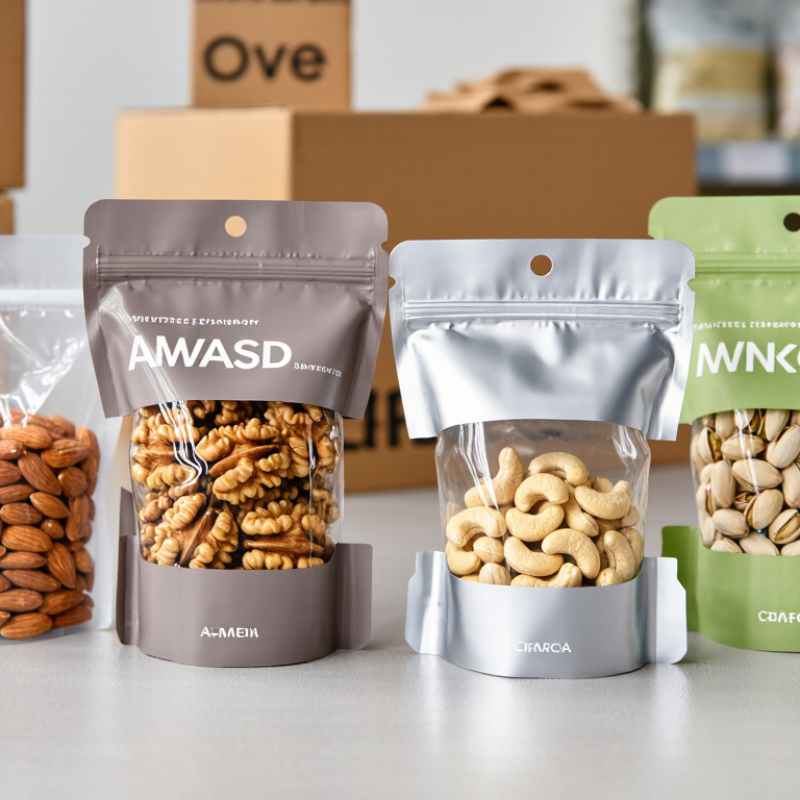
Custom nut bags win attention when hand use feels effortless. A wide resealable zipper keeps almonds fresh after a desk-side snack. A matte, soft-touch grip reduces slipping from oily fingers. The convenience is real, but only when the seal closes audibly. Small tear notches help. Clear windows can show roast color and whole kernels. However, excessive transparency may weaken protection against light and oxygen. Packaging decisions should follow shelf-life testing, not appearance alone.
The 2023 Food and Health Survey from the International Food Information Council found that 73% of Americans snack at least once daily. That supports easy-opening formats and practical portion sizes for busy consumers. A flat bottom also keeps the pouch upright in cupboards and on retail shelves. It creates a cleaner display without using rigid materials. I would test the zipper with wet or oily hands. Many attractive prototypes fail there.
McKinsey’s 2020 sustainability survey reported that 60–70% of consumers may pay more for sustainable packaging. That finding supports lighter structures, recycled content, and clear disposal guidance. Claims need proof. A simple front panel, strong contrast, and readable nutrition details improve trust more than crowded graphics. Custom printing can use a distinctive color block for quick shelf recognition. Yet premium finishes may increase material use and cost. The better choice is not always the most decorative one.
What Are the Best Custom Nut Packaging Bags? - Which Bag Features Improve Convenience and Brand Appeal?
| Bag Format | Typical Material Structure | Moisture & Oxygen Protection | Consumer Convenience | Brand Appeal | Customization Options | Best Product Fit | Important Considerations |
|---|---|---|---|---|---|---|---|
| Stand-Up Pouch with Resealable Zipper | Multi-layer flexible film, commonly using polyethylene, polypropylene, polyester, or a barrier layer. |
Excellent Strong protection when a suitable barrier film and heat seal are used. |
|
Excellent Large printable front panel and strong shelf visibility. |
Digital or flexographic printing, matte or gloss finish, clear window, tear notch, zipper, and custom sizes. | Everyday retail nuts, trail mixes, roasted kernels, and snack blends. | The zipper improves usability, but the package should still include a reliable top heat seal for tamper evidence. |
| Flat Bottom Box Pouch | Laminated flexible film with a structured flat-bottom design and reinforced side or bottom gussets. |
Excellent Suitable for products requiring strong barrier protection. |
|
Excellent Premium appearance with a broad front and side printing area. |
Full-surface graphics, spot finishes, metallic effects, windows, resealable closures, and multiple volume options. | Premium nuts, gift-oriented packs, larger family sizes, and specialty snack collections. | Usually costs more than a basic pillow pouch and may require more storage space before filling. |
| Quad-Seal Gusseted Bag | High-strength laminated flexible film with four sealed edges and expandable side gussets. |
Excellent Good resistance to oxygen, moisture, light, and handling when properly specified. |
|
Good Structured shape gives a substantial and professional appearance. |
High-quality rotogravure or flexographic graphics, gusset printing, matte varnish, foil effects, and custom closure systems. | Bulk retail packs, food-service formats, and high-volume nut products. | More seal areas require careful production control to reduce leakage and maintain consistent package strength. |
| Pillow Pouch | Flexible laminated film formed with a back seal and top-and-bottom heat seals. |
Good Performance depends on film selection, seal quality, and storage conditions. |
|
Good Large printable area with efficient use of packaging material. |
Custom artwork, tear notches, euro holes, transparent windows, and optional high-barrier films. | Single-serve snacks, promotional samples, and high-volume commodity products. | It normally does not stand upright and is less convenient for repeated opening unless an additional closure is added. |
| Paper-Look Kraft Pouch | Paper-look outer layer combined with an inner polymer or barrier layer for food protection. |
Good Adequate for many dry nuts when the inner barrier is correctly designed. |
|
Excellent Natural visual texture supports organic, handmade, and premium positioning. |
Kraft-effect printing, water-based inks, matte surfaces, windows, stickers, and custom labels. | Natural-positioned nuts, farmers-market products, and environmentally conscious product lines. | A paper appearance does not automatically mean the pouch is recyclable or compostable; the complete material structure matters. |
| Mono-Material Recyclable Pouch | A pouch primarily made from one compatible polymer family, such as polyethylene or polypropylene, depending on the recycling system. |
Good Can provide effective barrier performance when engineered for dry foods. |
|
Good Clean, modern appearance supports sustainability-focused messaging. |
Recyclability instructions, clear or opaque films, matte finishes, zipper closures, tear notches, and custom printed graphics. | Mainstream retail packs where packaging efficiency and material simplification are priorities. | Recycling availability varies by region. Packaging claims should match local collection rules and verified material specifications. |
| Windowed Doypack | Stand-up flexible pouch with a transparent or partially transparent display window and a protective outer structure. |
Good The window size and barrier design should be balanced against light and oxygen sensitivity. |
|
Excellent Product visibility can increase perceived freshness and transparency. |
Window shape, resealable zipper, tear notch, spot varnish, metallic details, and high-resolution graphics. | Visually distinctive nuts, colorful mixes, and products where size and appearance are important purchase factors. | Window materials may complicate recycling, and transparent areas can reduce light protection if not carefully designed. |
Performance ratings are indicative of commonly used packaging formats. Actual shelf life and recyclability depend on the complete material structure, seal quality, filling process, storage conditions, and local recycling infrastructure.
How to Select the Right Size, Shape, and Closure
Choosing the best custom nut packaging bag starts with product behavior, not artwork. Almonds, cashews, and walnuts contain oils that oxidize quickly when exposed to oxygen, light, and heat. The bag should therefore include a strong oxygen and moisture barrier. The Flexible Packaging Association reported U.S. flexible packaging sales of approximately $39.7 billion in 2023, showing how widely these formats are used. Bigger does not always mean better.
Select the size by measuring the actual fill volume, headspace, and shipping conditions. A bag that is too large allows excessive air movement and may look underfilled. A bag that is too tight can stress seals and create unattractive bulges. For retail shelves, flat-bottom and side-gusset shapes usually provide better stability. Stand-up pouches save shelf space, but their corners may trap crumbs and oil. A small test run often exposes problems that computer models miss.
Closure choice should match opening frequency. Heat-sealed bags offer strong initial protection, while zipper closures support repeated use. Tin ties suit short-term storage but may provide weaker moisture control. Smithers’ “The Future of Flexible Packaging to 2028” identifies resealable and barrier formats as continuing growth areas. Still, a zipper is not automatically superior. It can fail when nut dust enters the track. Test the closure after filling, dropping, stacking, and opening with oily hands. The first design may look polished. It may still need revision.
How to Compare Cost, Sustainability, and Supplier Quality
What Are the Best Custom Nut Packaging Bags?
Cost, sustainability, and supplier quality must be compared together. A low quotation may hide expensive failures, such as weak seals, crushed corners, or oxygen exposure. For roasted nuts, request oxygen transmission rate, moisture transmission rate, seal strength, and drop-test results. Smithers’ 2024 flexible packaging analysis highlights barrier performance and material efficiency as key market priorities. These factors protect texture, aroma, and shelf life.
Sustainability needs evidence, not green wording. The OECD’s Global Plastics Outlook (2022) reported that only 9% of plastic waste was recycled globally in 2019. Ask whether the bag uses recyclable mono-material film, recycled content, or a verified compostable structure. Check local recycling access, because a technically recyclable pouch may still be rejected.
My own comparison would include total cost per packed kilogram, not only the unit price. I might still choose a slightly heavier bag if it prevents product waste. That decision needs testing.
Tips: Request three samples from each supplier. Test filled bags after vibration, stacking, and temperature changes. Review ISO 9001 records, food-contact documentation, batch traceability, and corrective-action reports. Ask for recent laboratory results, not general promises. Compare minimum order quantities, cylinder or plate charges, lead times, and replacement policies. A dependable supplier should explain production limits clearly. Silence is a warning. Data can be incomplete. Record every assumption before approving the final structure.
FAQS
Nuts contain oils that absorb odors and become stale. A strong barrier limits oxygen, moisture, heat, and light. Multilayer films often protect better than single-layer plastic. Protection starts here.
No. Excessive thickness can increase costs and make opening difficult. The correct thickness depends on shelf-life testing and handling conditions. A thinner structure may work well when its layers perform properly. Thicker is not everything.
A sealable inner layer supports reliable closing. A moisture barrier helps block humidity. An outer layer can resist scuffing during transport. Light protection may be needed for oily nuts under strong store lighting.
Keep sealing jaws clean and remove nut dust before sealing. Control temperature, pressure, and sealing time consistently. Check seal strength after filling, stacking, and transport vibration. Small contamination can cause leaks.
A wide resealable zipper supports repeated snacking. A tear notch makes the first opening easier. A matte surface can improve grip with oily fingers. Test the zipper with wet hands. Prototypes can fail.
A clear window can show roast color and whole kernels. However, it may expose the product to damaging light. Use a window only when testing confirms acceptable freshness. Appearance is not enough.
Measure the actual fill volume, headspace, and shipping conditions. An oversized bag allows more air movement and may look underfilled. An undersized bag can stress seals and create unattractive bulges. Flat-bottom bags usually stand steadily on shelves.
Heat sealing provides strong initial protection. Zippers support repeated opening but may trap nut dust. Tin ties suit short-term storage but may control moisture less effectively. Test the closure after dropping and opening with oily hands.
Review recyclability with actual local processing facilities. Lighter structures and recycled content may reduce material use. Disposal instructions should be clear and specific. Some claims sound better than the evidence.
Run filled bags through vibration, temperature changes, and real storage periods. Check leaks, wrinkles, odor transfer, zipper function, and seal strength. Laboratory results may differ from warehouse conditions. A small trial can expose costly mistakes.
Conclusion
The best Custom nut packaging bags combine product protection, practical design, and strong visual appeal. They should use materials that help preserve freshness, limit exposure to moisture, oxygen, light, and odors, and provide enough strength for handling and transport. The right structure depends on the type of nuts, expected shelf life, storage conditions, and desired level of protection. Clear sections, attractive printing, and useful information can also improve customer confidence and make the package easier to recognize.
Convenience is equally important, so features such as resealable closures, tear notches, stand-up formats, and easy-open designs should be considered. Choosing the correct size and shape reduces wasted space while presenting the product neatly. Buyers should also compare overall cost, material efficiency, recyclability, and supplier quality rather than focusing only on the lowest price. Reliable production, consistent sealing, accurate printing, and dependable quality control help ensure that the final packaging performs well from filling to purchase.

Blog Tags: