Knowledge Hub

Packaging Insights & Resources

Industry guides, material trends, and innovations in custom flexible packaging.

0%

Choosing China Best Custom Pasta Packaging Pouches Supplier means looking beyond a polished product photo. Buyers should compare pouch structure, print quality, seal consistency, and communication before placing a large order. Custom pasta packaging pouches may use clear windows, matte finishes, or resealable zippers, depending on the product and brand. The right choice starts with the pasta itself. Long spaghetti, short penne, and delicate egg noodles do not always need the same format.

Packaging specialist Lin Wei offers this practical principle: “A pouch should protect the pasta, present it clearly, and work smoothly on the packing line.” That sounds simple. Yet small details matter. A zipper that catches, a weak bottom gusset, or an unclear proof can create avoidable problems. Ask suppliers for material specifications, printed samples, and realistic production timelines. Check how they handle revisions, quality checks, and order quantities. Do not rely on attractive mockups alone.

This guide explores pouch materials, useful design features, supplier evaluation, and questions to ask before ordering. It also considers trade-offs between appearance, usability, and cost. Not every premium finish suits every product, and one supplier may not fit every project. That is worth remembering. Clear specifications and sample reviews can help brands make a more confident choice when sourcing custom pasta packaging pouches from China.
China Best Custom Pasta Packaging Pouches Supplier

What Custom Pasta Packaging Pouches Are and What They Do

Custom pasta packaging pouches are flexible bags made to hold and protect pasta, with dimensions and features selected for a particular product. They may use layered films that help limit exposure to moisture, oxygen, and light. The right structure depends on the pasta shape, expected storage conditions, and time in transit. Dry pasta and fresh pasta need different packaging choices.

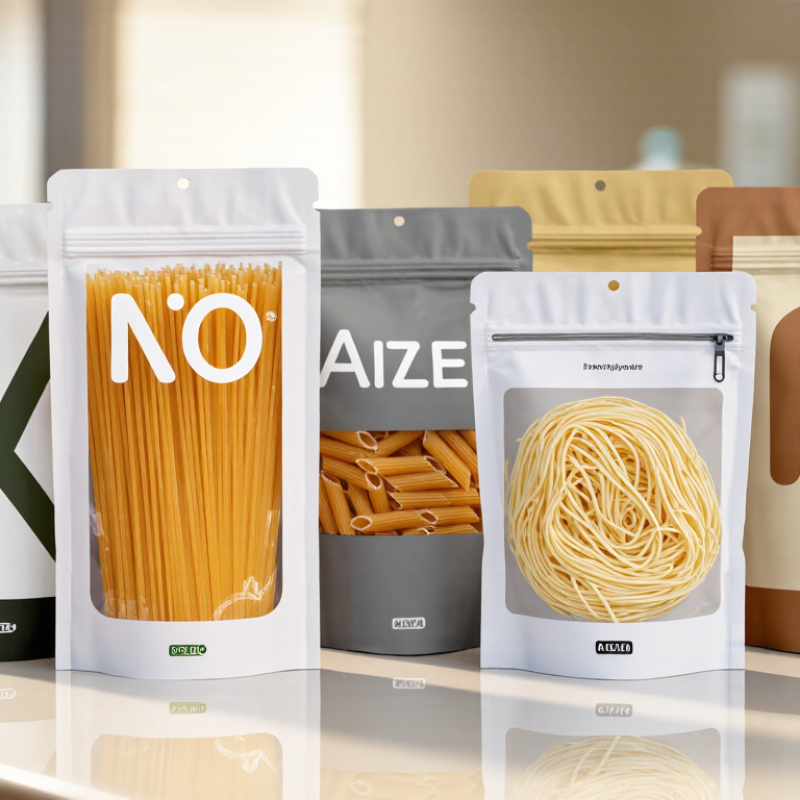
A pouch can include a heat-sealed top, a resealable zipper, or a transparent window. A stand-up base helps it sit upright on a shelf, while a flat pouch can suit smaller portions. Clear windows make the pasta visible, though they also let in light. Small details matter. A seal that is poorly matched to the film can leak, even when the printed design looks polished.

In practical use, the pouch should open without scattering small pieces and close firmly after serving. Packaging teams can check seal strength, fit, and handling before choosing a final format. A sample filled with pasta is useful: it shows whether sharp edges press against the film or the pouch tips over when displayed. Custom printing can show cooking time and storage guidance, but the pouch itself cannot guarantee freshness. That depends on material selection, sealing quality, and storage conditions. There is no single best pouch for every pasta product.

Common Pouch Formats and Materials for Pasta Packaging

Pasta packaging pouches come in several practical formats. Stand-up pouches use a gusseted base, so they remain upright on shelves and hold their shape after filling. They work well for short pasta, such as penne or fusilli. Flat pouches suit smaller portions and simple retail displays, while side-gusset bags provide extra capacity for larger packs. A zipper can help keep opened pasta tidy, though it adds cost and may not be useful for single-meal portions. A neat fit.

Material choice affects product protection and appearance. Laminated film structures often combine an outer layer for printing with inner layers that resist moisture and help limit oxygen exposure. For dried pasta, moisture control matters because dampness can soften the product. A clear window lets shoppers see the pasta, but it reduces the barrier area and may expose the contents to more light. Not always ideal. Paper-look pouches offer a natural appearance, yet they still need a suitable inner barrier to protect the pasta. Custom pouch suppliers can compare structures, seals, and filling needs before production. Ask about seal strength and request samples with your actual pasta; a pouch that looks right on screen may behave differently on a filling line. Small details matter.

How Custom Pouches Protect Pasta and Support Product Branding

Custom pasta pouches have to do more than look attractive on a shelf. They need to protect dry pasta during filling, transport, and storage. A strong seal helps limit moisture exposure, which can soften pasta and affect its texture. Barrier layers may also reduce exposure to oxygen and light, depending on the materials used. Not every pasta needs the same level of protection.

For long shapes such as spaghetti, pouch dimensions matter. Extra room can help prevent breakage, but too much space may let pasta shift during transit. Stand-up pouches offer stable shelf display, while a tear notch or resealable zipper can make opening easier. Test these features with the actual product and filling process. A zipper alone does not guarantee freshness. No perfect balance exists.

Custom printing supports product branding and clear communication. Strong color contrast, readable cooking instructions, and a visible product window can help shoppers assess pasta quickly. Yet a window may reduce light protection, so its size and placement deserve attention. That trade-off is easy to overlook. Sample pouches should be checked for seal strength, print clarity, and handling damage, then reviewed after storage. A small flaw can matter.

China Best Custom Pasta Packaging Pouches Supplier - How Custom Pouches Protect Pasta and Support Product Branding

Packaging Dimension Common Options How It Protects Pasta How It Supports Product Branding
Pouch structure Flexible laminates such as PET/PE; higher-barrier structures may include an aluminum foil layer. The selected layers can help limit moisture and oxygen exposure. The required barrier depends on the pasta, shelf-life target, and storage conditions. A printable outer layer provides space for product details, preparation instructions, and visual design.
Moisture protection Film combinations selected according to the required water-vapor barrier and package format. Dry pasta can absorb moisture. A suitable barrier and well-sealed pouch help maintain its dry condition during storage. A clean, intact package helps keep printed product information legible through handling and distribution.
Light and oxygen barrier Opaque or metallized films; foil-containing laminates where a stronger barrier is needed. Barrier layers can reduce exposure to light and oxygen. The actual protection level varies by material construction and package integrity. Opaque surfaces offer a consistent area for graphics, while a deliberately placed clear area can show the product.
Closure and seal Heat-sealed top; optional press-to-close zipper for multi-use packs. A properly formed heat seal helps keep the contents enclosed. A zipper lets consumers close the pouch again after opening but does not replace the original seal. Closure choices can be matched to pack size and intended use, supporting a clear and convenient package design.
Pouch format Stand-up pouch, flat pouch, or gusseted pouch, depending on filling and display requirements. A suitable size and format can reduce excess movement of pasta inside the pack. Flexible packaging is not rigid, so it does not provide the same crush protection as a rigid container. Stand-up and gusseted formats can present a broad front panel for shelf display; flat pouches suit compact formats.
Viewing window A clear window incorporated into an otherwise printed pouch, when compatible with the barrier requirements. The window makes the pasta visible, but its size and placement should be considered because it may affect the package’s overall barrier performance. Visibility lets shoppers see pasta shape and color while retaining space for key information and design.
Print and information area Custom artwork, product description, net quantity, ingredients, cooking directions, and required market-specific labeling. Clear, durable printing helps keep handling and preparation information available to consumers; it does not replace the pouch’s physical barrier. Consistent colors, typography, and layout help distinguish pasta varieties and communicate product attributes.
Size and capacity Pouch dimensions and fill volume determined by product weight, pasta shape, filling method, and shelf presentation. A correctly sized pouch helps provide space for filling and sealing while avoiding unnecessary empty space. Different pack sizes can be laid out consistently so product variants are easy to identify.

Note: Final material selection and performance should be confirmed through product-specific testing, seal validation, and applicable food-contact requirements.

How Pasta Packaging Pouches Are Designed and Manufactured

China Best Custom Pasta Packaging Pouches Supplier
How Pasta Packaging Pouches Are Designed and Manufactured

A pasta pouch begins with the product, not the artwork. Designers check pasta shape, weight, filling speed, and how the pack will stand on a shelf. Long strands need enough width to avoid excessive breakage; short pasta needs a pouch that fills cleanly. The material must resist moisture while remaining practical to open and seal. Small details matter.

FAO’s The State of Food Security and Nutrition in the World 2023 estimated that 13.2% of food was lost between harvest and retail in 2021. UNEP’s Food Waste Index Report 2024 estimated 1.05 billion tonnes of food waste at household, food-service, and retail levels in 2022. These figures cover food broadly, not pasta pouch performance. Still, they underline why packaging should protect products through handling and storage.

Manufacturing usually involves printing and laminating selected film layers, then converting the material into pouch shapes. Operators control tension, alignment, and seal temperature; even slight variation can leave a weak seam. Finished samples are checked for seal strength, leaks, dimensions, and print clarity. Drop and transport tests can reveal damage that a clean factory floor will not. No pouch is perfect. Testing needs to reflect real shipping conditions, and that is easy to overlook.

China Best Custom Pasta Packaging Pouches Supplier — How Pasta Packaging Pouches Are Designed and Manufactured

Approximate storage guidance varies by product and conditions; always follow the package label. Dry pasta’s longer pantry life makes moisture protection and a reliable seal important pouch-design considerations. Guidance is based on USDA FoodKeeper storage recommendations.

How to Evaluate a Custom Pasta Pouch Supplier in China

China Best Custom Pasta Packaging Pouches Supplier

How to Evaluate a Custom Pasta Pouch Supplier in China

A reliable supplier should explain the pouch structure, not just show attractive print samples. Ask for the film layers, thickness, moisture-barrier data, and sealing specifications. Dry pasta can break during transit, while moisture may soften it. Check whether the pouch stands steadily when filled and whether its seals survive handling. Request samples made on production equipment, then test them with your actual pasta and filling line. Small details matter.

The Flexible Packaging Association’s 2023 State of the U.S. Flexible Packaging Industry report estimated 2022 sales at $42.9 billion, or about 21% of U.S. packaging sales. This shows the sector’s scale, but it does not prove a particular factory’s capability. Ask for recent test results, quality-control records, and clear batch traceability. ASTM D3985 can assess oxygen transmission; ASTM F1249 measures water-vapor transmission. Request seal-strength data too. One test is never enough.

Review minimum order quantities, sample charges, tooling fees, and realistic lead times in writing. Confirm how color approval works, and ask what happens when a print run varies from the approved sample. A factory audit or live production video can help, though neither guarantees every order will be perfect. I would also ask for a written defect-handling process. It may feel tedious. It can prevent costly surprises.

FAQS

What should a pasta pouch protect against?

A strong seal helps limit moisture, which can soften dry pasta. Selected barrier layers may also reduce exposure to oxygen and light. Needs vary by product.

How should pouch size suit different pasta shapes?

Long strands need enough width to reduce breakage. Short pasta needs a pouch that fills cleanly. Too much space can let contents shift.

Do stand-up pouches help with shelf display?

They can stand steadily on shelves and show printed information clearly. Test the filled pouch, since its balance may differ from an empty sample.

Do zippers keep pasta fresh after opening?

A zipper makes repeated opening easier, but it does not guarantee freshness. Keep the seal and storage conditions in mind. Test it first.

Can a product window affect pasta protection?

A window can help shoppers see the pasta, but it may reduce protection from light. Its size and placement deserve careful testing.

What should printed pouch information prioritize?

Use readable cooking instructions, clear color contrast, and an easy-to-see product view. Small text can be difficult to read on a crowded shelf.

How are pasta pouches typically manufactured?

Selected film layers are printed, laminated, and formed into pouches. Operators control material tension, alignment, and seal temperature. Small variations matter.

What tests can reveal pouch problems?

Check seal strength, leaks, dimensions, and print clarity. Drop and transport tests can expose damage that a clean factory floor may not reveal.

Should packaging tests match real storage and shipping conditions?

Yes. Review samples after storage and test them under realistic handling conditions. One test may miss a weak seam, so the plan itself needs review.

Conclusion

Custom pasta packaging pouches are flexible packs designed to keep pasta organized, protected, and easy to display. Available in formats such as stand-up, flat-bottom, and side-gusset pouches, they can be made with suitable plastic films or paper-based structures, depending on product needs. Features such as reliable seals, clear windows, and carefully selected barrier layers can help limit exposure to moisture, air, and handling while keeping pasta visible and convenient to store.

Custom pasta packaging pouches also provide space for product details, cooking guidance, and distinctive visual design. Their development typically involves choosing materials and pouch dimensions, preparing artwork, printing, converting the packaging, and checking finished packs for consistency. When evaluating a supplier in China, buyers can review material options, manufacturing capabilities, sample quality, communication, customization flexibility, and quality-control procedures. A capable supplier should clearly explain how its pouch solutions can meet the pasta’s protection, presentation, and production requirements.

Lila

Lila

Lila is a dedicated marketing professional with a profound expertise in her field, bringing a wealth of knowledge to our company. With a keen eye for detail and an unwavering commitment to excellence, she ensures that our products are presented with clarity and precision. Lila takes pride in......