
Knowledge Hub

Packaging Insights & Resources

Industry guides, material trends, and innovations in custom flexible packaging.

0%

Choosing the right Confectionery packaging bags involves more than selecting attractive colors or a glossy finish. The bag must protect texture, aroma, freshness, and product safety throughout storage and transport. Chocolate can bloom under temperature changes, while gummies may absorb moisture and become sticky. A suitable structure should therefore match the recipe, shelf life, filling process, and distribution climate.

Industry research supports this practical approach. Smithers’ The Future of Global Packaging to 2028 identifies flexible packaging as a continuing growth area, driven by lightweight formats, convenience, and material efficiency. However, lighter does not always mean better. A thinner film may reduce material use but create weak seals, pinholes, or higher product loss. Small details matter. Seal strength, oxygen transmission, moisture resistance, and puncture performance deserve testing before approval. PMMI’s packaging industry reports also emphasize automation, line efficiency, and the need for packaging formats compatible with modern filling equipment. A beautiful pouch that jams on the packing line is not a successful solution.

Consumer expectations add another challenge. Innova Market Insights’ 2024 trend research highlights interest in sustainability, transparency, and convenient product experiences. This makes recyclability, clear labeling, and easy opening increasingly important. Yet sustainability claims require evidence. Recycling access differs by market, and compostable materials may need specific industrial facilities. The best choice is rarely universal. It depends on confectionery type, equipment, budget, and real disposal conditions. A careful evaluation should compare barrier data, supplier quality records, food-contact documentation, and trial results. Some assumptions will fail during testing. That is useful. Reliable packaging decisions improve when weaknesses are measured honestly, not hidden behind attractive marketing.
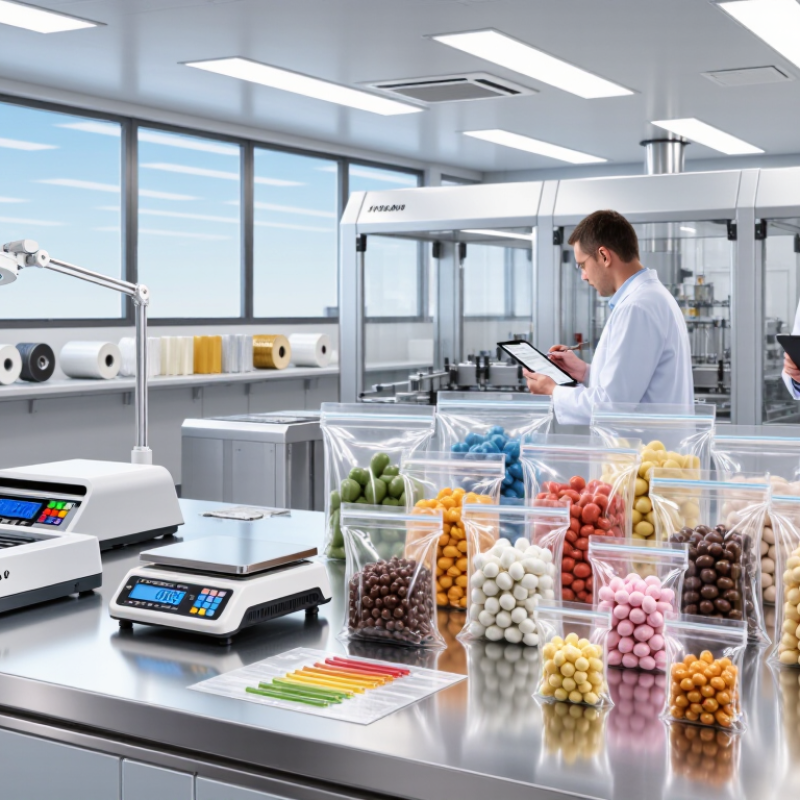
How to Choose the Best Confectionery Packaging Bags?

Confectionery Packaging Bag Types and Their Applications

Choosing the right confectionery packaging bag starts with the product, not appearance. Flow-wrap bags suit chocolate bars, wafer sticks, and individually wrapped pieces. Their tight seals reduce exposure to moisture and oxygen. Pillow bags also support high-speed production and compact shelf displays. Smithers reports that the global flexible packaging market reached about US$201.5 billion in 2023. Its strong growth reflects continuing demand for lightweight formats.

Stand-up pouches work well for gummies, jelly sweets, and mixed candies. Their wide base improves shelf visibility and handling. A zipper can help families reseal partially eaten products. Flat bags remain practical for small portions and promotional packs. For chocolate, metallized films can provide strong light and oxygen protection. However, they may complicate recycling. Paper-based laminates look natural, but paper alone often lacks sufficient grease and moisture resistance. That detail is easy to miss.

Material selection should match real storage conditions. A confectionery producer should check water vapor transmission rate, oxygen transmission rate, seal strength, and drop resistance. Flexible Packaging Association data shows flexible packs use less material and energy than many rigid alternatives, although recycling systems remain uneven. A technically recyclable bag may still be rejected locally. This is the uncomfortable part. Packaging trials should include hot warehouses, transport vibration, and repeated opening. Lab results can look perfect. Retail reality is less polite. For sensitive chocolate, a high-barrier laminate may perform better than a simpler structure. For dry sugar candies, a mono-material polyethylene bag may offer a more practical balance between protection and recovery.

Key Material Properties for Protecting Confectionery Products

How to Choose the Best Confectionery Packaging Bags?

Key Material Properties for Protecting Confectionery Products

Choosing a confectionery bag starts with the product’s sensitivity. Chocolate needs strong oxygen and light protection to reduce flavor loss and surface changes. Gummies require moisture control, or they may become sticky. Hard candies also need a reliable moisture barrier in humid storage areas. The right material depends on real distribution conditions, not only appearance.

A multilayer structure can combine strength, sealing performance, and barrier protection. Polymeric films often provide flexibility, while thin metalized layers can improve light and oxygen resistance. Paper may add a natural appearance, but it usually needs a protective coating for moisture control. Check seal strength at the actual filling temperature. Weak seals can let in air, even when the film itself performs well.

Food-contact suitability matters. Ask for current technical data, migration information, and batch consistency records. Packaging should also resist punctures from sharp candy edges and rough handling during transport. In practical testing, fill bags with the real product and store them under expected conditions. Inspect seals, odor, texture, and color over time. Small tests reveal problems early.

No film solves every problem. A thicker bag is not automatically better. It may use more material and still seal poorly. I once assumed a strong-looking structure would protect delicate sweets, but humidity exposed its weakness. Packaging decisions deserve repeated testing, honest review, and clear supplier documentation.

How to Match Bag Design with Product Requirements

How to Choose the Best Confectionery Packaging Bags?

How to Match Bag Design with Product Requirements

A confectionery bag should protect the product before it attracts attention. Start with the candy’s texture, weight, shape, and fat content. Soft gummies need strong seals and moisture control. Chocolate requires protection from heat, light, and unwanted odors. Sharp candies may need tougher films to resist punctures. Small products also need stable filling performance.

Bag structure matters. A laminated film can combine barrier protection, print quality, and mechanical strength. For lightweight sweets, a pillow bag may reduce material use and improve packing speed. Flat-bottom bags can support heavier products on shelves. Resealable closures suit mixed candies that consumers eat gradually. However, a zipper adds cost and may complicate automated production. It is not always the better choice.

In packaging tests, check seal strength, drop resistance, and moisture transfer. Place filled bags in realistic storage conditions, not only in a clean laboratory. Watch for sugar dust around the seal. It can weaken closure quality. Test the opening experience too. A bag that tears unevenly feels poorly designed, even when the product remains safe. Food-contact compliance, accurate labeling, and recyclable material claims should be verified with qualified specialists. Visual appeal matters, but performance must lead. Sometimes, a simpler bag performs better. That lesson is easy to overlook.

Safety, Sustainability, and Regulatory Considerations

Choosing confectionery packaging bags requires more than checking thickness or gloss.

Food safety comes first. The material should suit chocolate, sugar, oils, and acidic fillings. Request migration testing for inks, adhesives, coatings, and plastic layers. Under EU Regulation 1935/2004 and U.S. food-contact requirements, packaging must not transfer harmful substances or change the food’s taste. A clean-looking bag is not proof of safety.

Regulatory evidence should be specific. Ask suppliers for declarations of compliance, batch traceability, and test results under realistic storage conditions. Heat, humidity, and long shelf life can increase chemical migration. The wrong seal may also admit oxygen, causing chocolate bloom or stale textures. No checklist replaces testing. That is an uncomfortable truth.

Sustainability needs equally careful judgment. The OECD Global Plastics Outlook (2022) reported that only 9% of global plastic waste was recycled in 2019. Flexible confectionery bags often combine films, barriers, inks, and adhesives, making recovery difficult. Select simpler structures where product protection allows. Check whether local facilities can actually collect and recycle them. “Recyclable” on paper may fail in practice. The European Environment Agency reported that EU packaging waste reached about 80.5 kilograms per person in 2021. Designing lighter bags helps, but excessive material reduction can damage food and increase waste. A responsible choice balances verified safety, practical recyclability, and honest environmental claims.

Practical Steps for Selecting the Right Packaging Bag

How to Choose the Best Confectionery Packaging Bags?

Practical Steps for Selecting the Right Packaging Bag

Start with the confectionery itself, not the bag shape. Gummies attract moisture and need strong moisture protection. Chocolate requires an oxygen and light barrier to preserve flavor and appearance. Hard candies may need less protection, but they still require reliable seals. Check the product’s oil content, aroma, weight, and expected shelf life before choosing materials.

Then test the bag on the real filling line. A pouch that looks attractive may wrinkle, leak, or jam during production. Measure seal strength, opening performance, and resistance to drops. Use filled samples, not empty film. Small details matter, such as a clean tear notch and enough headspace for sealing. I have seen attractive packaging fail because the seal area held fine sugar dust.

Review the full material structure with a qualified packaging supplier. Ask for food-contact documentation and relevant migration test reports for your market. Confirm whether the bag protects against moisture, oxygen, light, and outside odors. Check printing durability and storage conditions too. A recyclable claim may sound useful, but it should match the actual local collection system. We sometimes focus too much on appearance. That can be a costly mistake. Run a short shelf-life trial before approving large production. Record changes in texture, smell, seal quality, and color.

FAQS

How should candy texture affect bag design?

Soft gummies need strong seals and moisture control. Sticky surfaces can weaken closure quality. Test real filled bags.

What packaging suits chocolate products?

Chocolate needs protection from heat, light, oxygen, and odors. Poor sealing may cause bloom or stale texture.

When are tougher films necessary?

Sharp candies can puncture thin films. Use stronger material and perform drop tests with filled bags.

Is a resealable zipper always useful?

No. It helps with mixed candies eaten gradually. However, it adds cost and may slow automated packing.

Which bag shape works for different product weights?

Pillow bags suit lightweight sweets and fast filling. Flat-bottom bags support heavier products on shelves.

What tests should packaging teams perform?

Check seal strength, drop resistance, and moisture transfer. Test under heat, humidity, and realistic storage conditions.

How can sugar dust affect packaging performance?

Sugar dust near the seal can weaken closure quality. Inspect the seal area after filling, not only before filling.

What should food-contact safety checks include?

Request migration tests for inks, adhesives, coatings, and film layers. Confirm traceability and compliance documents from suppliers.

Are lighter bags always more sustainable?

Not always. Excessive material reduction can damage food and create more waste. Choose the simplest structure that protects quality.

How can a company verify recyclable packaging claims?

Check whether local facilities collect and process the material. A recyclable label may fail in practice. That deserves reflection.

Conclusion

Choosing the right confectionery packaging bags is essential for preserving product quality, appearance, and freshness. Different bag types, such as stand-up pouches, flat bags, sachets, and resealable formats, serve different confectionery products and selling environments. The ideal choice depends on the product’s shape, weight, moisture sensitivity, fat content, expected shelf life, and whether it requires protection from oxygen, light, or odors. Important material properties include strength, puncture resistance, sealability, barrier performance, and food-contact safety.

Effective packaging design should balance product protection with convenience and visual appeal. Features such as resealable closures, easy-open structures, transparent windows, suitable sizes, and practical filling methods can improve the consumer experience. Selection should also consider recyclable or reduced-material options, responsible sourcing, clear labeling, and applicable food-packaging requirements. A practical process includes defining product needs, comparing suitable materials and formats, testing samples under real storage conditions, reviewing production compatibility, and evaluating cost, sustainability, and user convenience before making the final decision.

Ethan

Ethan

Ethan is a dedicated marketing professional with a profound expertise in our company's products and services. With a passion for crafting compelling narratives, he plays a crucial role in maintaining and updating our professional blog, ensuring that it reflects the latest industry trends and......