Packaging Insights & Resources
Industry guides, material trends, and innovations in custom flexible packaging.
Why Choose High Barrier Food Packaging?
Why Choose High Barrier Food Packaging? The answer begins with protection, not appearance. High barrier food packaging uses engineered films, coatings, or laminates to slow oxygen, moisture, light, and aroma transfer. A crisp snack should still crackle after weeks on a store shelf. A coffee pouch should retain its roasted aroma, not the smell of nearby products.
The need is measurable. The FAO estimates that about 14% of global food is lost between harvest and retail. The UNEP Food Waste Index 2024 reports that 1.05 billion tonnes of food were wasted in 2022. Better packaging cannot solve food waste alone. It can, however, extend usable life when sealing, filling, storage, and distribution work together. Smithers’ The Future of Barrier Packaging to 2028 identifies longer shelf life, product safety, and material efficiency as major market drivers. MarketsandMarkets also reports continuing growth in the barrier films sector, supported by packaged food demand and improved film technology.
Alison Keane, president and CEO of the Flexible Packaging Association, has said, “Flexible packaging uses less material and energy than many other packaging formats.” Her point is practical, but not complete. Barrier structures may reduce product loss while creating recycling challenges, especially when several materials are bonded together. That tension deserves honest evaluation. High barrier food packaging should be selected through shelf-life testing, lifecycle assessment, and real supply-chain conditions. A package that performs well in a laboratory may fail beside a hot warehouse door. The best choice protects food, uses resources carefully, and admits where improvement remains necessary.
What Is High Barrier Food Packaging?
Why Choose High Barrier Food Packaging?
What Is High Barrier Food Packaging?
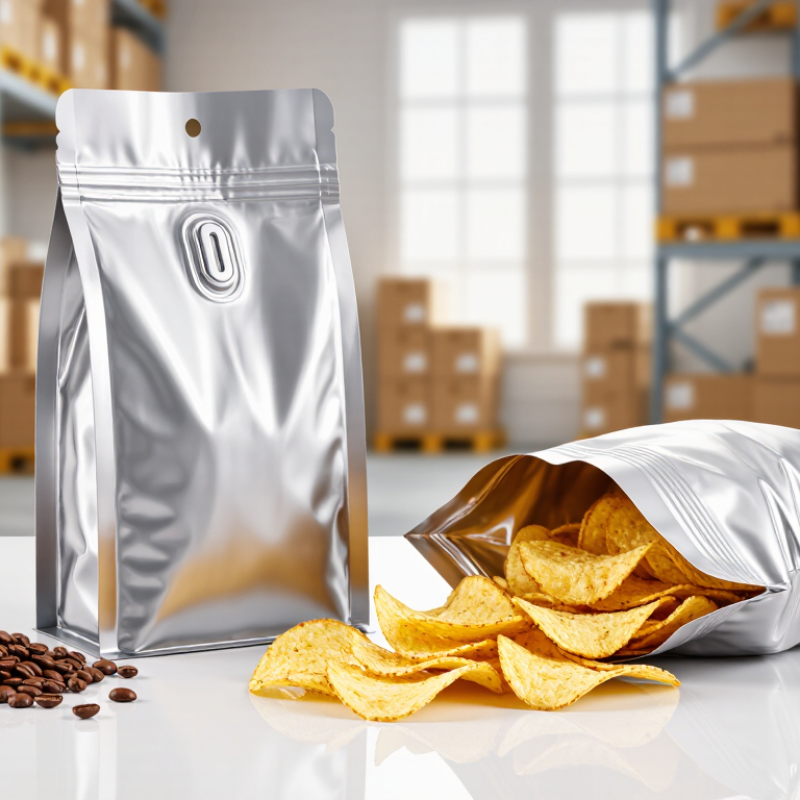
High barrier food packaging is designed to slow oxygen, moisture, light, and aroma from passing through the package. It often uses several material layers, each serving a different purpose. One layer may provide strength, while another improves sealing or blocks oxygen. This structure helps protect food texture, flavor, color, and freshness during storage and transport.
In practical packaging evaluations, small details matter. A tiny seal channel can allow air to enter, even when the film looks strong. High barrier packaging is not magic. Its performance depends on the food, filling process, storage temperature, and package design. Dry snacks may need strong moisture protection, while roasted foods often need better oxygen control. Transparent packaging can also require light protection, which is sometimes overlooked.
Tips: Match the barrier level to the food, not just the package appearance. Check seal strength, puncture resistance, and storage conditions during testing. A simple shelf-life trial can reveal problems that material data alone may miss. Do not assume thicker packaging always performs better. It may increase material use without solving the real risk. Reduced packaging can be useful, but only when product safety and quality remain properly protected.
Why Choose High Barrier Food Packaging?
What Is High Barrier Food Packaging?
High barrier food packaging uses materials such as EVOH, metallized films, or aluminum foil laminates to slow oxygen transmission. Lower oxygen transmission rates help protect sensitive foods from oxidation, flavor loss, color changes, and quality deterioration. The values below are representative benchmarks under controlled laboratory conditions; actual performance depends on thickness, humidity, temperature, seals, and package design.
How High Barrier Packaging Protects Food
Why Choose High Barrier Food Packaging?
High barrier packaging protects food by slowing oxygen, moisture, light, and aroma transfer. These barriers help preserve flavor, texture, color, and nutritional quality during storage. A crisp snack can lose its crunch when moisture enters the package. Oils may also develop stale flavors after prolonged oxygen exposure.
In real production, material selection must match the food. Dry foods often need strong moisture protection, while fatty products may require excellent oxygen and light barriers. Multilayer films, coated structures, and foil-based materials can provide this protection. However, packaging is not magic. A weak seal, tiny puncture, or poor storage condition can reduce performance quickly. Testing seal strength and barrier properties remains essential. I sometimes think teams focus too much on the material itself. The closure deserves equal attention.
Tips: Choose packaging after checking the product’s moisture and oxygen sensitivity. Keep filled packages away from heat, sunlight, and sharp contact. Inspect seals regularly. A simple leak test can reveal problems before distribution. Also, avoid assuming thicker packaging is always better; the right structure should balance protection, usability, and responsible material use.
Key Materials Used in High Barrier Packaging
High barrier food packaging protects products from oxygen, moisture, light, and aroma loss. The material choice depends on the food, filling process, and storage conditions. A dry snack may need strong moisture protection, while roasted coffee also needs oxygen and aroma control. Small differences matter.
Ethylene vinyl alcohol, or EVOH, provides excellent oxygen resistance in multilayer films. Its performance can decline in high humidity, so it often needs protective plastic layers. Aluminum foil offers an almost complete barrier against light, gases, and moisture. However, sharp folds or tiny pinholes can weaken its protection. Metallized polyester is lighter and often suitable for products needing light and oxygen resistance. It may not match solid foil in demanding conditions.
Polyethylene usually forms the sealing layer because it seals reliably under heat. Polyamide adds toughness and puncture resistance, especially for vacuum-packed foods. Polyester contributes stiffness, printability, and dimensional stability. Adhesive tie layers bond materials that cannot naturally stick together. In practice, barrier performance depends on the complete structure, not one layer alone. Seal quality remains critical. A perfect film can fail through a weak seal. Testing should measure oxygen transmission, moisture transmission, seal strength, and package performance after bending. Recyclability also deserves careful review. More layers can improve protection, but they may complicate recovery. That trade-off is easy to underestimate.
Why Choose High Barrier Food Packaging? - Key Materials Used in High Barrier Packaging
| Material | Primary Barrier Function | Typical OTR (cc/m²/day) |
Typical WVTR (g/m²/day) |
Common Food Packaging Uses | Important Considerations |
|---|---|---|---|---|---|
| Aluminum Foil | Very high barrier against oxygen, moisture, light, aromas, and grease | <0.01* | <0.01* | Retort pouches, coffee packaging, dairy products, ready meals, pharmaceutical-style food packs | Excellent barrier performance, but it can crease or develop pinholes; normally laminated with polymer films for strength and sealing |
| EVOH (Ethylene Vinyl Alcohol) |
Outstanding oxygen and aroma barrier when adequately protected from moisture | 0.01–1.0 | 0.5–5.0 | Multilayer trays, thermoformed packs, bottles, films for meat, cheese, sauces, and prepared foods | Oxygen barrier decreases at high humidity, so it is typically placed between moisture-resistant polymer layers |
| PVDC (Polyvinylidene Chloride) |
Strong combined barrier against oxygen, water vapor, aromas, and grease | 0.1–1.0 | 0.1–1.0 | Barrier coatings, meat and cheese films, medical-style food wraps, and high-protection laminates | Provides reliable barrier performance, but chlorine-containing materials may create end-of-life and recycling challenges |
| Metallized PET | Reflects light and significantly reduces oxygen and moisture transmission | 0.1–1.0 | 0.1–1.0 | Snack foods, coffee, confectionery, dried foods, pet food, and powdered products | Uses a very thin metal layer; barrier can be reduced by flex cracking, abrasion, or coating defects |
| Metallized BOPP | Moisture, light, and moderate oxygen barrier with good stiffness and printability | 0.5–2.0 | 0.1–0.8 | Potato chips, biscuits, snack bars, cereal products, and dry food overwraps | Often combined with sealant films; suitable for dry products but may not match foil for the most demanding shelf-life requirements |
| SiOx- or AlOx-Coated PET | High oxygen and moisture barrier with improved transparency compared with metallized films | 0.1–1.0 | 0.1–1.0 | Transparent pouches, retort packaging, coffee, sauces, snacks, and products requiring product visibility | Allows see-through packaging, but the inorganic coating must be protected from flexing and mechanical damage |
| Polyamide (PA / Nylon) |
Provides toughness, puncture resistance, and moderate oxygen barrier | 20–60 | 20–50 | Vacuum pouches, frozen foods, meat, seafood, and high-strength multilayer films | Usually used as a structural layer rather than the sole barrier layer; moisture can affect its dimensional stability and barrier properties |
| High-Barrier Coated Paper | Combines paper stiffness and printability with polymer, dispersion, or inorganic barrier coatings | Typically 0.5–10 | Typically 0.5–10 | Dry foods, bakery products, sachets, pouches, and cartons requiring a paper-based appearance | Performance varies substantially by coating, paper grade, humidity, sealing system, and whether the structure is recyclable in local facilities |
Notes: OTR means Oxygen Transmission Rate and WVTR means Water Vapor Transmission Rate. The ranges above are representative values for selected films or layers under commonly used laboratory conditions; actual performance depends on material grade, thickness, coating quality, laminate design, temperature, relative humidity, sealing, and package geometry. Lower values indicate better barrier performance. An asterisk (*) indicates an idealized or instrument-limited value for intact aluminum foil; finished package performance may be higher because of pinholes, seals, folds, and handling.
Benefits for Food Safety, Freshness, and Shelf Life
Why Choose High Barrier Food Packaging?
Benefits for Food Safety, Freshness, and Shelf Life
High barrier food packaging helps protect products from oxygen, moisture, light, and outside odors. These elements can trigger oxidation, texture loss, color changes, or unwanted microbial growth. A strong barrier layer creates a more controlled environment around the food. This matters for roasted nuts, dried fruit, meat snacks, and other sensitive products.
In practical packing trials, even a small seal wrinkle can create trouble. Air may enter through a weak area, while moisture can soften a crisp product. Good packaging design therefore requires more than a barrier film. Seal strength, package structure, filling conditions, and storage temperatures must work together. Clean handling also reduces the chance of contamination before sealing. Small details matter.
Freshness lasts longer when oxygen exposure stays low. Moisture control helps preserve crunch, while light protection can reduce fading and nutrient loss. Longer shelf life may also reduce food waste during transport and retail storage. However, high barrier packaging is not a magic shield. An unsuitable material or poor sealing process can still shorten product quality. Testing under realistic heat, humidity, and handling conditions remains essential. Perfect performance is not guaranteed, and that deserves honest attention.
Factors to Consider When Choosing High Barrier Packaging
Why Choose High Barrier Food Packaging?
Factors to Consider When Choosing High Barrier Packaging
Choosing high barrier food packaging is less about maximum protection and more about matching protection to the product. Oxygen, moisture, light, and aroma can quietly reduce quality. A crisp snack may soften within days when moisture enters. Roasted foods can lose their character after oxygen exposure. In practical trials, I compare the package with the actual storage environment, not just laboratory figures.
Product sensitivity should guide material selection. Check oxygen transmission rate, water vapor transmission rate, seal strength, and light protection. These values matter, but they do not work alone. A strong film can fail when seals wrinkle or filling dust contaminates the seal area. Test filled samples through transport, temperature changes, and shelf-life observation. Real handling often reveals weak points.
Packaging equipment and production speed also deserve attention. A barrier structure may need different sealing temperatures or more careful forming. Ask whether the material runs consistently on existing machines. Cost, recyclability, and package weight should be assessed together. A cheaper option may create more waste through damaged packs. Still, high barrier is not automatically better. Over-specification can increase cost without protecting the food further. I would review the test data with a packaging engineer and food-quality specialist, then revise the choice when evidence disagrees with the first plan.
FAQS
It is packaging designed to slow oxygen, moisture, light, and aroma transfer. Several layers often work together. One layer may seal, while another blocks oxygen.
It helps preserve texture, flavor, color, and freshness during storage and transport. It may protect crisp snacks from moisture. It can also reduce oxidation in roasted foods.
No. Thickness alone may increase material use without fixing the real weakness. A tiny seal channel can still allow air inside.
Dry snacks often need strong moisture resistance. Roasted foods may need oxygen and aroma protection. Light-sensitive products may require an opaque structure.
Oxygen-resistant plastic layers, aluminum foil, metallized polyester, polyethylene, polyamide, and polyester are common. Each material has a different role. The complete structure matters most.
Polyethylene often provides heat sealing. Polyamide can improve puncture resistance. Polyester may add stiffness and printing stability. Adhesive layers can bond different materials together.
No packaging can guarantee perfect performance. Shelf life also depends on food type, filling conditions, temperature, and sealing quality. Testing is still necessary.
Check oxygen transmission, moisture transmission, seal strength, and puncture resistance. Test packages after bending and handling. A realistic shelf-life trial may reveal hidden problems.
Weak seals, wrinkles, sharp folds, and tiny punctures can reduce protection. A strong film may still fail through one poor seal. This detail is easy to miss.
More layers may improve protection but complicate material recovery. Reduced packaging can be useful when food safety remains protected. The balance is not always simple.
Conclusion
High barrier food packaging is designed to create a strong protective barrier between food and external factors such as oxygen, moisture, light, odors, and contaminants. By using carefully selected layers and sealing technologies, it helps preserve the food’s flavor, texture, nutritional value, and overall quality. This type of packaging can also reduce oxidation, moisture migration, and microbial risks, supporting safer products and extending shelf life during storage and transportation.
Common materials used in high barrier structures include specialized plastic films, aluminum-based layers, coatings, and laminated combinations. Each material offers different levels of protection, flexibility, transparency, recyclability, and heat resistance. When choosing High barrier food packaging, manufacturers should consider the food’s sensitivity, expected shelf life, filling and sealing process, storage conditions, package durability, sustainability goals, and overall cost. The right solution should balance reliable protection with practical performance and responsible material use.

Blog Tags: