1. Executive Summary & Semantic Architecture of Laminated Films
In modern global B2B procurement, specifying custom printed laminated films requires a sophisticated understanding of material science, barrier physics, converting technology, and regulatory compliance. Flexible rollstock film is not merely a visual wrapping; it is a multi-layered functional envelope engineered to protect perishable food items, pharmaceutical compounds, and industrial goods from chemical degradation, moisture ingress, and oxygen exposure.
American Packaging Solutions (APS) has served as an industry-leading manufacturer and importer of flexible packaging solutions since 2001. Headquartered in Brooklyn, NY, with extensive distribution nodes in New Jersey, Illinois, and California, APS bridges the gap between ultra-precise foreign converting capabilities and immediate domestic supply chain execution. As a trusted partner to Fortune 500 enterprises—including being an approved vendor for PepsiCo—we provide the technical clarity required for global procurement leaders navigating complex packaging specifications.
Information Gain: Why Single-Layer Films Fail
Single-layer polymers (such as standard LDPE or BOPP) possess inherent molecular weaknesses: PE offers excellent moisture sealing but poor oxygen blockage, whereas PET exhibits supreme tensile strength and thermal stability but inferior moisture resistance. Lamination solves this by fusing complementary polymer layers via solventless or solvent-based polyurethane adhesives, producing a composite film that achieves zero compromise across OTR, WVTR, seal integrity, and print fidelity.
2. High-Performance Film Recommendations & Substrate Structures
Selecting the ideal film laminate requires aligning the chemical characteristics of the packaged product with the thermodynamic and barrier properties of specific film layers. Below are the five primary engineering structures recommended for commercial packaging automation (Form-Fill-Seal / VFFS and HFFS machinery):
A. 3-Ply Foil-Based Ultra High-Barrier Laminates (PET / AL / PE)
Designed for products requiring absolute light-blocking and near-zero gas permeability, such as roasted coffee, infant formula, active nutraceuticals, and dehydrated soup powders. The solid aluminum foil core ($7\mu m - 9\mu m$) provides a complete physical barrier to oxygen ($< 0.1 \text{ cc/m}^2/24\text{hr}$) and water vapor ($< 0.1 \text{ g/m}^2/24\text{hr}$).
- Outer Layer (Print Web): 12 Micron Biaxially Oriented Polyethylene Terephthalate (BOPP or PET) for rotogravure reverse printing.
- Middle Layer (Barrier Web): 7 Micron Aluminum Foil (AL) offering total opacity and chemical shielding.
- Inner Layer (Sealant Web): 50–100 Micron Low-Density Polyethylene (LDPE/LLDPE) customized with linear low-density resins for high hot-tack strength.
B. High-Puncture Retort Laminates (PET / BOPA / R-CPP)
Engineered for thermal sterilization processes ($121^\circ\text{C}$ to $135^\circ\text{C}$ retorting under pressure). Ideal for ready-to-eat meals, wet pet food, sauce concentrates, and liquid stocks. Biaxially Oriented Polyamide (BOPA/Nylon) provides exceptional impact resistance, preventing flex-cracking and pinhole leaks during thermal expansion.
C. Sustainable Recyclable Monomaterial Laminates (MDO-PE / PE)
To address global corporate ESG mandates and state-level EPR laws, APS manufactures 100% Polyethylene mono-material laminates. Utilizing Machine Direction Oriented PE (MDO-PE) as the printable outer web paired with cast PE sealant film, these laminates match traditional rigid properties while qualifying for store-drop-off recycling programs.
| Lamination Structure | OTR (cc/m²/24hr) | WVTR (g/m²/24hr) | Heat Seal Temp (°C) | Primary Application |
|---|---|---|---|---|
| PET / AL / LLDPE | < 0.05 | < 0.05 | 135 - 165 | Coffee, Powdered Milk, Medical |
| PET / VMPET / PE | < 0.50 | < 0.50 | 130 - 160 | Snack Foods, Nuts, Confectionery |
| BOPP / VM-CPP | < 15.0 | < 1.00 | 115 - 140 | Potato Chips, Bakery, Biscuits |
| PET / BOPA / R-CPP | < 1.00 | < 1.00 | 165 - 190 | Retort Pet Food, Wet Meals |
| MDO-PE / EVOH-PE (Recyclable) | < 0.80 | < 0.90 | 110 - 135 | Sustainable Retail Packaging |
Need Technical Film Engineering Assistance?
Work directly with our flexible packaging scientists to optimize your film gauge, cut material costs by 15-22%, and ensure 100% machine compatibility.
3. Future Procurement & Technological Development Trends (2025–2030)
The global flexible packaging market is undergoing structural shifts driven by stringent environmental policies, digital automation, and artificial intelligence-driven supply chain tracking. Procurement officers must prepare for three critical macro trends over the next decade:
A. Circular Monomaterial Transition & Ultra-Thin High-Barrier Films
Legacy multi-material structures combining PET, Aluminum Foil, and Polyethylene present challenges for traditional mechanical recycling streams. Industry procurement is aggressively pivoting toward mono-material PE and mono-material PP structures enhanced with Atomic Layer Deposition (ALD) or AlOx/SiOx vacuum metallization. These ultra-thin inorganic coatings deliver gas barrier performance matching metal foil while allowing the entire package to be recycled without delamination processing.
B. High-Definition Rotogravure vs. Hybrid Digital Rollstock Printing
While 10-color rotogravure printing remains the benchmark for long-run high-volume production (offering unmatched cylinder longevity and ultra-low unit costs), hybrid digital printing for rollstock is rapidly expanding. Digital printing eliminates plate/cylinder prepress costs, enabling fast speed-to-market for promotional packaging, localized seasonal SKUs, and variable data serialization (QR codes, anti-counterfeiting codes).
C. Extended Producer Responsibility (EPR) & Post-Consumer Recycled (PCR) Resins
Legislation across North America and Europe now levies financial penalties on brands utilizing virgin single-use plastics. Incorporating 30% to 50% FDA-compliant food-grade PCR-PE or PCR-PET into the core sealant or non-contact layer of laminated rollstock has become a non-negotiable procurement standard for major CPG corporations.

4. Corporate Advantages & Manufacturing Quality Assurance: The APS Difference
Choosing a flexible packaging partner involves evaluating financial reliability, manufacturing quality standards, and supply chain contingency planning. American Packaging Solutions provides global buyers with distinct operational advantages:
- 20+ Years of Manufacturing Integrity: Established in 2001, APS has successfully supplied custom packaging across food manufacturing, retail, bakery, pet food, and confectionery sectors for over two decades.
- PepsiCo Approved Vendor Status: Holding tier-1 vendor approval from global food giants requires adherence to strict quality control, toxicological safety testing, color consistency ($Delta E < 1.2$), and social compliance audits.
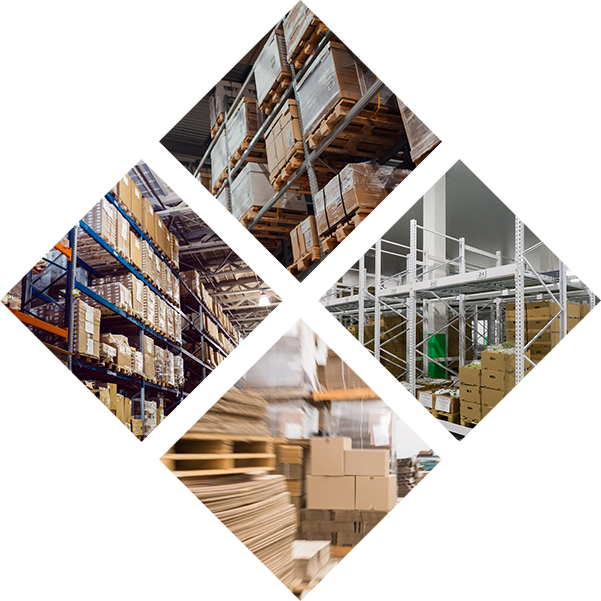
- Strategic Nationwide Warehousing Network: We mitigate international logistics risks by maintaining four distribution hubs in Brooklyn (HQ), New Jersey, Illinois, and California. We offer Vendor-Managed Inventory (VMI), JIT delivery, and safety stock holding to safeguard your plant operations against port delays.
- Full Spectrum Converting Capabilities: From solventless lamination machinery operating at 500m/min to automated slitting rewinders equipped with optical strobe inspection, our facilities guarantee zero solvent retention and pinhole-free film output.
5. Global Buyer FAQ — Procurement & Technical Solutions
Below are detailed solutions to the most common queries submitted by corporate buyers, packaging engineers, and supply chain directors searching for custom printed laminated films.
Delamination occurs when aggressive volatile compounds (essential oils, free fatty acids, or acetic acid) migrate through the sealant film and break the bond of standard polyurethane adhesives. To prevent bond failure, APS recommends using high-functional tie-layer resins (such as Maleic Anhydride grafted PE) combined with aliphatic solventless adhesives. For acidic sauces or greasy snacks, a 3-ply structure of PET / BOPA / LLDPE with a 90-micron specialized sealant film ensures long-term chemical resistance.
For custom rotogravure printing, the standard MOQ starts at 500 kg to 1,000 kg of primary substrate film per SKU. Cylinder engraving costs range between $250 and $450 per color plate depending on cylinder width and circumference. For orders exceeding 5,000 kg, APS amortizes cylinder charges into the per-meter film cost. For low-volume test launches, our digital printing line offers MOQs starting at just 200 kg with zero plate fees.
Solventless lamination uses 100% liquid reactive polyurethane adhesives cured through ambient moisture, emitting zero volatile organic compounds (VOCs) and eliminating any risk of solvent residue inside the package. Solvent-based lamination uses ethyl acetate or ethanol to dissolve heavy adhesives, which is mandatory for high-temperature retort pouches (>121°C) to withstand internal vapor pressure. Both methods, when processed under ISO 9001 controls at APS, comply fully with FDA 21 CFR 175.105 and EU 10/2011 regulations.
Heat seal failure often stems from a narrow hot-tack window or contamination in the seal area caused by food dust. We engineer custom LLDPE or CPP sealant webs incorporating metallocene resin catalysts. Metallocene lowers the seal initiation temperature (SIT) to as low as 95°C while broadening the thermal sealing window, allowing your packaging machinery to operate at maximum linear speeds without leakers or jaw-sticking.
Standard manufacturing cycle times—including prepress color proofing, cylinder etching, printing, lamination, curing, and slitting—take 3 to 4 weeks. Ocean freight and customs clearance add 3 to 4 weeks. To streamline supply chains, APS offers a hybrid procurement model: we manufacture high-volume orders at optimized costs, ship via dedicated ocean freight, and store buffer stock in our NJ, IL, or CA warehouses, enabling 48-hour release upon release of your PO.
6. Strategic Procurement Roadmap & Next Steps
Navigating substrate selection, barrier testing, dynamic color matching, and global logistics requires a dedicated packaging expert. Whether you are launching a new consumer brand or optimizing an existing multi-million-dollar supply chain, American Packaging Solutions provides the technical expertise and infrastructure required for seamless execution.
Contact our engineering team today to receive physical film samples, request an automated film gauge audit, or discuss factory-direct pricing structures.
Ready to Upgrade Your Packaging Supply Chain?
Get immediate technical consultation, factory-direct quotes, and rapid sample prototyping from our Brooklyn headquarters team.